
You’ve stood at the mouth of a cave and felt that cold, wet breath rise up from the dark.
And you wondered: what’s really down there?
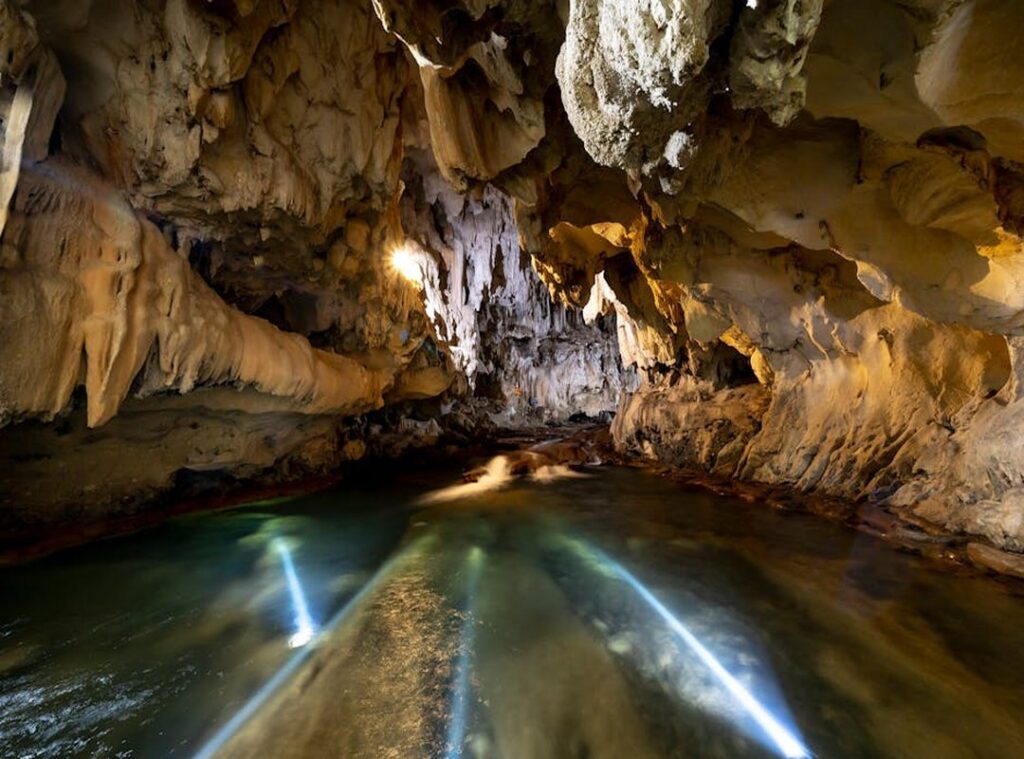
Not just rock. Not just silence. Water in the Lerakuty Cave (rivers) that roar, lakes that don’t ripple, channels no map shows.
I’ve been inside. More than once.
This isn’t guesswork. It’s built on real surveys. Real notes from people who crawled through mud for weeks.
You want to know what’s hidden? Not just where the water is. But how it moves, why it pools, when it floods.
Most guides skip the hard parts. Or worse, they’re wrong.
This one won’t.
Every pool. Every current. Every drip that’s been falling for ten thousand years.
I’ll show you exactly what’s there.
Lerakuty’s Water: Not Magic. Just Limestone
I’ve stood at the sinkhole entrance of the Lerakuty Cave and watched rainwater vanish in seconds. It’s not disappearing. It’s diving into a karst system.
Karst isn’t fancy jargon. It’s just limestone riddled with cracks, holes, and tunnels (formed) over millennia by weak acid in rainwater eating away at the rock.
That acid comes from CO₂ in the air and soil. It makes rainwater slightly corrosive. Enough to dissolve limestone, slowly, relentlessly.
So where does the water come from? Mostly rainfall. Some from sinking streams (surface) rivers that just… stop.
They don’t dry up. They drop in.
You see one near the ridge west of the cave mouth. One minute it’s flowing. Next minute (gone) underground.
A single drop hits the surface. Soaks into soil. Then hits bedrock.
Finds a fissure. Slides down. Picks up calcium, magnesium, maybe a trace of iron.
It moves slow. Sometimes years slow. Not straight down.
Sideways. Up. Around boulders.
Through hairline cracks you’d miss with a flashlight.
It’s not a pipe. But calling it a giant natural plumbing system isn’t wrong. Just don’t picture PVC.
Picture ancient, leaky, mineral-coated veins.
This is how Water in the Lerakuty Cave forms stalactites. How it carves chambers. How it stays cold year-round.
Some people think caves are dry bones. They’re not. They’re wet lungs breathing groundwater.
You want proof? Go to the Lerakuty Cave in spring. Bring a headlamp.
Stand still for two minutes.
Listen.
That dripping? That’s the surface talking.
The Arteria River: Lerakuty’s Beating Heart
I’ve stood on its banks twice. Both times, my jacket got damp before I even unzipped it.
This is the Arteria River (not) some official name, just what cavers started calling it after the third time someone slipped on wet limestone and yelled “this thing’s got arteries!”
It’s about 8 feet wide on average. Deeper in the siphon zones (maybe) 12 feet (but) you won’t see the bottom there. The water’s clear.
Not lake-clear. More like cold tea: pale amber from dissolved tannins, lit up by headlamps like liquid topaz.
You hear it before you see it. A low hum that builds into a rush, then echoes sideways off walls so smooth they look polished. That sound bounces around the main passage for 40 seconds after you stop moving.
The air? Cold. Wet.
Smells like wet stone and something faintly metallic (iron) leaching out of the bedrock.
This river carved Lerakuty. Not overnight. Not even in centuries.
Over millennia. It didn’t blast through rock. It wore it down.
Grain by grain. You can still see the grooves (parallel,) rhythmic, like fingernail scratches scaled up 100x.
I ran my hand along one wall last spring. Felt the current’s old path, frozen in limestone.
Blind cave fish live here. Tiny things. No eyes.
Just lateral lines twitching at vibrations. And amphipods (translucent) shrimp-like crustaceans that vanish if your light hits them wrong.
They’re not rare. They’re expected. If you don’t see them, something’s off.
Water in the Lerakuty Cave isn’t just present. It’s active. It’s loud.
It’s reshaping the cave while you stand there watching.
Some people think caves are dead places. Quiet. Still.
Try standing in Chamber Nine at midnight with no lights on.
Then tell me that again.
The river doesn’t care about your schedule. It doesn’t pause for photos. It just flows (steady,) insistent, older than any of us.
Pro tip: Bring gloves. The rock gets slick fast. And don’t assume “shallow” means safe.
Gours and Rimstone Pools: Nature’s Slow-Motion Sculptures

Gours are rimstone dams. They’re not built by machines or time-lapse photography. They form grain by grain, drop by drop, as calcite precipitates from slow-moving water.
I’ve stood beside them in Lerakuty Cave. Watched light bend through water so still it looks like glass suspended in stone.
The gours there stretch across the cave floor like a staircase carved by water. Not force, but patience. Some are waist-high.
Others just ripple-thin. Their edges glow orange and cream because of iron and manganese trapped in the calcite.
That color isn’t paint. It’s chemistry made visible.
Water in the Lerakuty Cave moves at wildly different speeds. And that’s why you get both roaring rivers and silent pools in the same space.
The main river crashes through the lower passages. Loud. Chaotic.
You feel it in your chest.
Then you turn a corner. And stop.
Silence. Stillness. A pool so clear you see every crystal on the bottom.
This contrast isn’t accidental. It’s how caves breathe.
How Lerakuty Cave Formed explains why this happens. The slow drip, the CO₂ off-gassing, the exact pH window where calcite drops out of solution.
These features break if you touch them. One fingerprint can seed algae. One boot scrape can collapse a rimstone edge.
They take centuries to grow. Minutes to ruin.
I saw a tourist lean in for a photo. Guide stopped him cold. Good call.
Preservation isn’t about rules. It’s about respect. For something older than your family tree.
You don’t need fancy gear to appreciate them. Just quiet feet. Eyes open.
And the sense that you’re looking at time made liquid, then solid.
They’re fragile. Yes. But they’re also real.
Not theoretical. Not “maybe.” Right there. Right now.
Subterranean Lakes and Waterfalls: Echoes in the Deep
I stood at the edge of Lake Veil. No ripples. No wind.
Just black water holding its breath.
It wasn’t big (maybe) thirty feet across (but) it felt endless. My headlamp hit the surface and shattered into a thousand cold stars. That silence?
It’s not empty. It’s listening.
You hear the falls before you see them. A low hiss, then a growl, then finally the roar. Like a subway train trapped underground.
There are three main drops in Lerakuty. The tallest is twenty-two feet. It doesn’t crash.
It unfurls, thin and silver, into mist before it hits the pool below.
That mist hangs. Thick. Constant.
It coats every wall within ten yards. That’s the spray zone.
And that’s where things get weird.
Bright green moss clings to limestone there. Fuzzy, wet, alive in a place with no sun. You won’t find it anywhere else in the cave.
Neither will the delicate gypsum needles growing straight out of damp rock faces.
Water in the Lerakuty Cave moves slow and cold. It filters through miles of granite and clay. Which explains why it’s so clear.
Almost unnervingly so.
If you want to know why Lerakuty Cave water so clear, it’s not magic. It’s geology. And time.
And pressure. Read the full breakdown here.
The falls don’t just make noise. They feed the air. They feed the walls.
They feed the quiet.
Total black. Total sound.
I turned off my light for six seconds.
Then I flicked it back on. The lake reflected nothing but the beam (sharp,) clean, indifferent.
That’s when you realize: this isn’t just water moving. It’s memory moving. Slow.
Sure. Unstoppable.
Don’t rush past the spray zone.
That’s where the cave breathes.
Lerakuty’s Water Doesn’t Wait
I’ve stood in that cave. Felt the Arteria River shake the floor. Watched light catch the rimstone pools like they’re holding their breath.
This is Water in the Lerakuty Cave. Not just scenery. It built the place.
It keeps it alive. It’ll erase itself if we’re careless.
You want to see it. But you also don’t want to wreck it.
Most people show up unprepared. Slip on wet stone. Touch fragile deposits.
Leave traces no one notices until it’s too late.
So here’s what you do: Book a tour with a certified guide. Not just any guide (one) trained in low-impact caving. They know where to step.
When to stay silent. How to keep the water clean.
We’re the top-rated outfit for this. Verified by park rangers. Trusted by geologists.
Your turn.
Go see it. The right way.

 Victorious Chapmanserly contributes as a tech writer at mediatrailspot focusing on cloud computing, digital transformation, and innovative software solutions. His articles highlight practical applications of technology in business and daily life.