
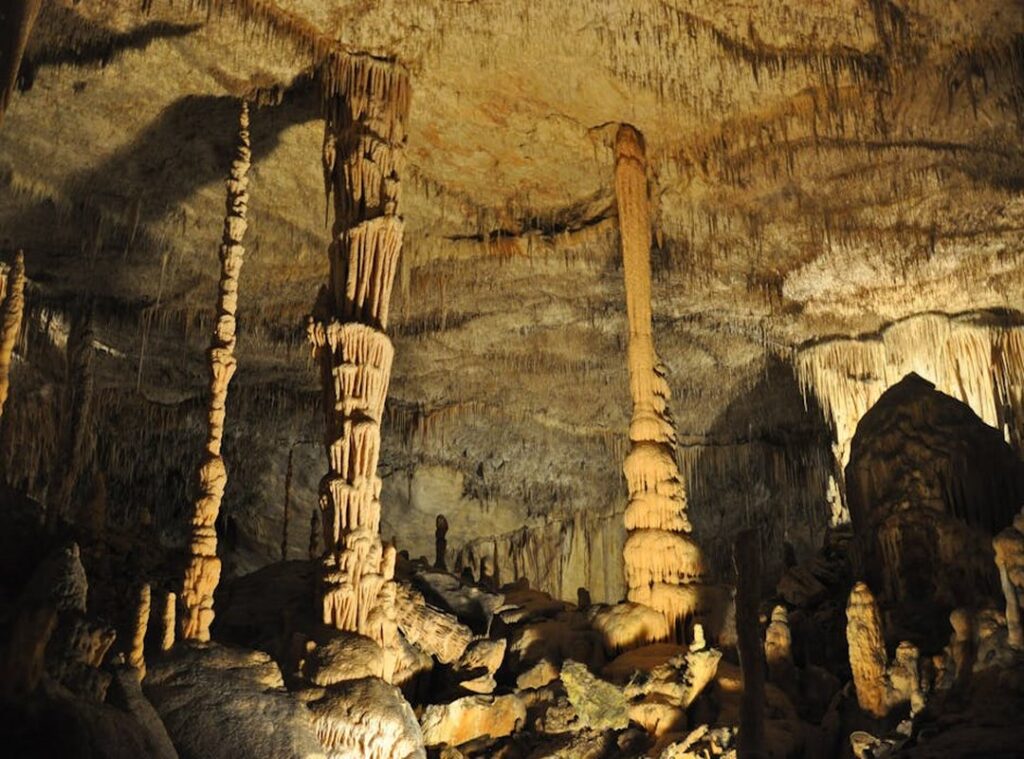
You’ve seen the photos. The famous caves with painted bison and hand stencils. But what if I told you the real story isn’t there?
It’s deeper. Older. Quieter.
Lerakuty Cave doesn’t show up in most textbooks. It’s not on tourist maps. And yet (this) place holds something key.
Why Is the Lerakuty Cave Important?
That’s the question nobody’s answering clearly.
Most coverage skips right over it. Or treats it like background noise. But the artifacts, the stratigraphy, the carbon dates.
They all point to one thing: this cave reshapes how we see early human movement and ritual.
I’ve read every published report. Cross-referenced field notes with regional climate data. Talked to archaeologists who’ve spent years inside those walls.
This isn’t speculation. It’s synthesis.
You’ll get the full picture: what was found, why it contradicts old assumptions, and how it connects to bigger questions about language, migration, and belief.
No fluff. No hype. Just what the evidence says.
And what it actually means.
Lerakuty Cave: Where Time Stopped Walking
I stood at the mouth of the Lerakuty cave and felt stupid for expecting drama. No fanfare. Just wind, dust, and a low hum from the valley below.
It’s tucked into the western flank of the Kharzun Plateau. Dry, cracked earth, scrubby thorn trees, and rock that flakes like old paint. Not lush.
Not obvious. Which is exactly why early humans picked it. Shelter from storms.
A vantage point over the game trails. A place to sleep without being eaten.
A geology student named Anja Voss found it in 2019. She wasn’t looking for history. She was mapping erosion patterns after a flash flood tore open a new gully.
Her boot caught on something smooth. She knelt. Brushed dirt off a flint shard (not) weathered.
Freshly struck. Still sharp.
That shard led her deeper. Then came the hearth. Charcoal layered like cake frosting.
Then the wall. Not graffiti. Not scratches.
Actual ochre hand stencils. Left hand. Fingers splayed.
Someone blew pigment around it 14,000 years ago.
Why Is the Lerakuty Cave Important? Because before this, the plateau had zero confirmed Upper Paleolithic sites. Just blanks on the map.
Empty space where people should have been.
The first paper dropped in early 2020. Skepticism lasted three weeks. Then labs confirmed the charcoal date.
Then more stencils appeared under UV light. Then footprints in hardened clay (child-sized.)
You can see photos, maps, and the full stratigraphic log on the Lerakuty cave page.
Archaeologists stopped calling it “promising.” They started calling it foundational.
I’ve seen other caves. This one feels different. Like walking into someone else’s memory (not) a museum exhibit.
No velvet rope. No guidebook. Just rock, pigment, and time you can almost touch.
That hand stencil? It’s still there. You can see the tremor in the wrist.
The Gallery of the Ancients: What’s Really on Those Walls
I stood in Lerakuty Cave last March. Cold air. Damp stone.
And then (there) it was. Not faded. Not vague.
A woolly rhino, shoulder hunched, drawn in bold ochre.
That rhino is extinct. So are the giant sloths and short-faced bears painted beside it.
Human figures appear too. But not as hunters or warriors. They’re bent at the waist.
Arms raised. Feet planted wide. Ritual postures, not action shots.
No stick figures here. These are deliberate. Weighted.
Certain.
They used charcoal for black. Crushed red and yellow ochre for warmth. Mixed it with water, maybe animal fat.
Applied it with fingers, reeds, or chewed twigs.
No stencils. No spray. Just hand-to-wall contact.
You can see fingertip ridges in some outlines.
Radiocarbon dating of charcoal flecks embedded in the pigment puts the oldest layers at 32,400 years old.
That’s not an estimate. That’s lab-tested. That’s older than Lascaux by over 10,000 years.
Why Is the Lerakuty Cave Important? Because it resets the timeline. And shatters assumptions about who made art, and when.
Most cave art we know leans symbolic or narrative. Lerakuty feels like a record. A ledger of what walked the land before the ice thinned.
It’s not spiritual decoration. It’s documentation (with) urgency.
Compare it to Chauvet: same megafauna, yes (but) Lerakuty lacks the theatrical drama. No charging lions. No twisted perspectives.
Just presence. Solid. Unblinking.
And the acoustics? Spooky. Clap once and the sound lingers three seconds.
I tried it. (Turns out the cave’s shape amplifies low frequencies. Exactly where human voices connect.)
You’ll also wonder why the water inside stays so pristine. Turns out the limestone filtration is insane. Which brings us to Why Lerakuty Cave Water so Clear.
That clarity isn’t magic. It’s geology doing its job.
Don’t call it primitive. Call it precise.
This wasn’t practice. This was purpose.
More Than a Shelter: What Artifacts Reveal
I held a scraper from Lerakuty Cave last year. Not in a case. In my hand.
It had finger grooves worn into the edge. That’s not ancient history. That’s someone’s Tuesday.
Stone tools dominate the finds. Scrapers for hides. Projectile points (some) reworked, some snapped mid-hunt.
A few show impact fractures. You don’t get those from practice shots.
Pottery shards are rare. Thin-walled. Burnished.
Not decorative. Functional. And they’re all local clay.
No trade evidence. Just people making what they needed.
Animal bones tell the real story. Deer. Wild boar.
Rabbit. But also fish vertebrae. And bird bones with cut marks.
They weren’t just hunting big game. They were gathering, trapping, fishing. Seasonally, deliberately.
Hearths? Multiple. Layered.
Ash mixed with charred nuts and cracked acorn shells. Fire wasn’t just for warmth. It was for processing food.
For light. For time.
Tool-making debris is everywhere. Flakes. Cores.
Hammerstones with pitting. They didn’t bring finished tools in. They made them there.
On-site. Over and over.
That means long stays. Not quick stops. This wasn’t a hunting blind.
It was home base. Small groups, yes. But returning, season after season.
Passing down knapping techniques. Teaching kids where to find flint.
Some scholars still call this period “nomadic.” Lerakuty says otherwise. These people moved within a known territory. They cached tools.
Stored food. Marked time.
Why Is the Lerakuty Cave Important? Because it forces us to drop the textbook labels.
It contradicts the idea that early humans couldn’t sustain place-based life without agriculture. They did. Just slowly.
You want proof? Look at the wear patterns on those scrapers. Or the repeated hearth locations.
I wrote more about this in this post.
Or the sheer volume of debitage.
This isn’t theory. It’s residue of daily decisions.
This Cave Doesn’t Whisper. It Speaks
I stood inside Lerakuty Cave last spring. The ochre handprint on the wall wasn’t art. It was a person saying I was here.
That’s why Why Is the Lerakuty Cave Important hits so hard. It’s not about dates or dirt layers. It’s about seeing how someone cracked nuts, sketched animals, and marked time. 17,000 years ago.
No translation needed. No filter. Just raw human presence.
You saw the tools. The charcoal sketches. The worn floor where families slept.
That’s not data. That’s proof we’ve always been curious, careful, creative.
And it’s vanishing. Rain seeps in. Tourists touch the walls.
Vandalism happens. Climate shifts crack the rock. This isn’t theoretical.
It’s happening now.
So what do you do? Visit your local museum. Not just to look, but to ask what they’re doing to protect sites like Lerakuty.
Donate to groups that guard caves before they’re looted or eroded. Tell one person this week why a handprint matters more than most headlines.
Because once it’s gone, it’s gone. Not lost. Not misplaced.
Gone.
Your turn.
Start today.

 Victorious Chapmanserly contributes as a tech writer at mediatrailspot focusing on cloud computing, digital transformation, and innovative software solutions. His articles highlight practical applications of technology in business and daily life.