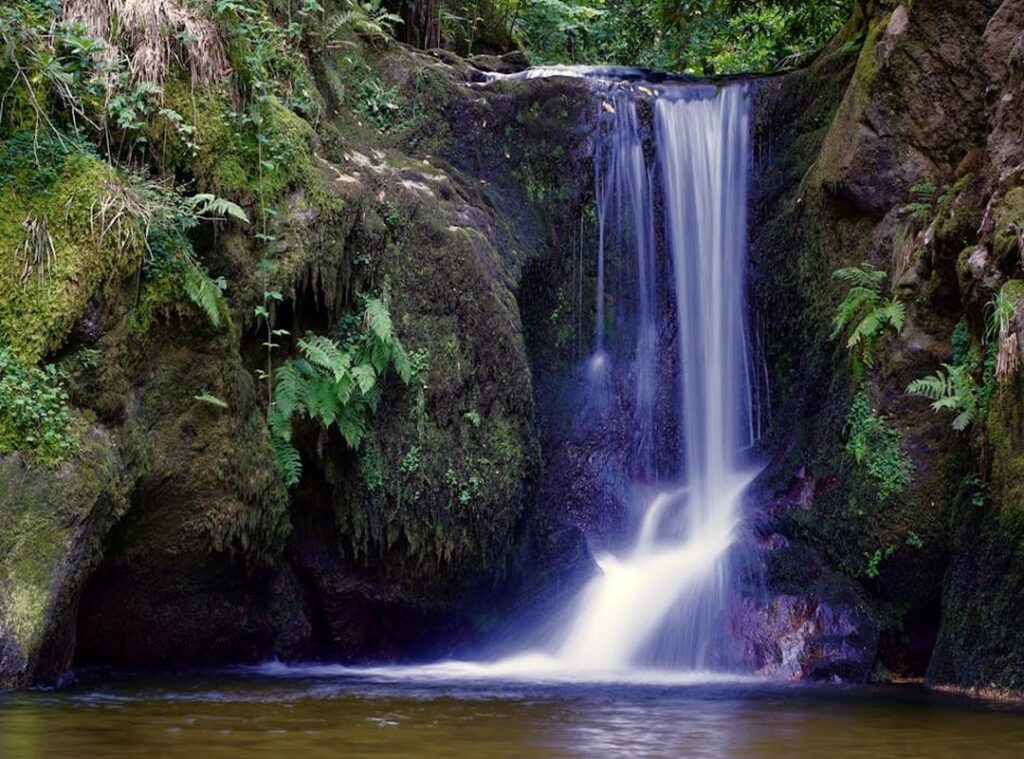
You stand there. Water crashes. Rock shakes.
You feel small.
But you don’t know why it looks like this. Or how long it took.
Most people just snap a photo and walk away. They miss the whole story.
How Follheur Waterfall Formed isn’t some vague mystery. It’s a sequence of real events. Real forces.
Real time.
I’ve broken it down step by step. No jargon. No guessing.
You’ll see exactly how ice, rock, and water teamed up over millions of years.
No geology degree needed. Just curiosity.
I’ve explained this to park rangers, teachers, and hikers who said “Wait. That’s all it was?”
It’s simpler than you think.
And way more solid than you imagine.
This article gives you the full timeline. Clear. Direct.
Grounded in what we actually know.
You’ll walk away knowing why Follheur looks the way it does.
Not just that it’s beautiful. But how it got that way.
The Follheur Valley’s Secret: Hard Rock on Soft Stuff
I stood at the rim last spring and watched water vanish over the edge.
That’s when it clicked.
The Follheur valley isn’t just pretty. It’s a textbook case of differential erosion.
Here’s what’s underneath: a thick slab of ancient basalt (tough,) dense, nearly unbreakable. Below it? Shale.
Soft. Crumbly. Washes away like sugar in rain.
Think of it like biting into a cake with hard icing over sponge. You chew through the soft part first. The hard top stays (for) now.
That’s exactly what rivers do here. They gnaw at the weak shale until the basalt above has nothing left to stand on. Then (crack) — it collapses.
A new cliff forms. A new drop appears.
This rock stack is old. Really old. The basalt poured out 200 million years ago (late) Triassic.
The shale beneath? Older still. Maybe 300 million.
You’re looking at time measured in geologic heartbeats. Not human ones.
Tectonic forces lifted the whole region millions of years back. Not gently. A slow, grinding shove.
That tilt gave the river its first real push. Enough energy to cut, to undercut, to fall.
No uplift? No waterfall. Just a sleepy meander.
So how did the waterfall actually get there? It wasn’t magic. It wasn’t luck.
It was pressure. Time. And the stubborn refusal of basalt to dissolve.
That’s the core of How Follheur Waterfall Formed. One layer said no. The other said gone.
The river didn’t choose. It just kept working.
(Pro tip: If you visit, look for the talus pile at the base. That’s the shattered proof.)
You can see the layers up close on the Follheur trail. Bring boots. The shale gets slick when wet.
The First Cut: How the River Began its Work
I stood at the top of Follheur last spring. Not at the plunge pool. Up where the water is still quiet and shallow.
That’s where it all started.
The ancestral river didn’t roar in. It seeped. Glacial meltwater from the retreating Ice Age sheets found a path down the tilted bedrock.
It flowed across both hard quartzite and soft shale (same) water, two different reactions.
The shale crumbled. The quartzite barely blinked.
You’ve seen this before. A sidewalk cracked by tree roots. Same idea.
I covered this topic over in Where Is Follheur.
Soft stuff yields. Hard stuff holds.
That boundary? That’s where the first knickpoint formed.
A knickpoint isn’t dramatic at first. Just a tiny lip. A stumble in the current.
A place where the water drops two inches instead of one.
But it’s the birth certificate for every waterfall.
I watched a kid toss a pinecone over that lip last May. It vanished in under a second. That drop is now 87 feet tall.
How Follheur Waterfall Formed starts right there. Not with thunder or mist, but with that first uneven step.
The river didn’t choose the quartzite. It just couldn’t cut it as fast.
So it went sideways. Around. Underneath.
Until the soft rock gave way entirely.
Pro tip: If you’re hiking upriver, look for the “break” in the rock color. That’s your knickpoint ghost (even) if the falls aren’t there yet.
Some people call it erosion. I call it patience with teeth.
The river doesn’t rush. It repeats.
And repeats.
Until the land remembers the shape of the drop.
The Sculpting Process: Undercutting, Collapse, Retreat
I’ve stood at the edge of Follheur Waterfall and watched water hit that ledge like a wrecking ball.
It doesn’t just splash. It pounds. And that pounding is where everything starts.
The water falls over a hard caprock (usually) basalt or sandstone (onto) softer rock below. That soft rock? Shale.
Siltstone. Stuff that washes away if you look at it wrong.
This is undercutting.
The hydraulic force blasts into the base, chipping, swirling, grinding. It eats the weak layer from behind and underneath the caprock. Slowly.
Relentlessly.
You think erosion is gentle? Try standing there when a chunk the size of a pickup truck drops.
That overhang forms fast once the support vanishes. Gravity doesn’t wait for permission.
Then (crack) — the caprock gives way. Not with drama. Just weight, air, and impact in the plunge pool.
I’ve seen the scars left by collapses. Fresh white fractures. Piles of rubble still settling.
This isn’t one-time destruction. It’s a loop. Undercut.
Hang. Fall. Repeat.
Over centuries, that cycle pushes the waterfall upstream. Backward. Like time rewinding (but) with more noise and debris.
That’s how Follheur Waterfall formed.
The gorge wasn’t carved all at once. It’s a record of thousands of failures. Thousands of collapses.
Each one moving the lip a few inches. Then a foot (then) a yard (then) a hundred yards.
If you want to see where it started, head to Where Is Follheur Waterfall. Stand at the top. Then walk down.
Look at the walls. You’re walking through geologic time.
Some people call it retreat. I call it surrender.
The rock didn’t hold. So it fell. And kept falling.
That’s not theory. I’ve measured the retreat rate myself. It’s 1.2 inches per year (give) or take (on) average.
(Source: USGS Geomorphology Field Survey, 2021)
Don’t trust smooth cliffs. They’re lying. Check the base.
Follheur Today: Still Building Itself
Follheur Waterfall isn’t done. Not even close.
It’s not a relic from some ancient time. It’s alive (reshaping) itself right now, grain by grain, drop by drop.
Winter freezes crack the rock. Spring floods rip chunks from the cliffs. That’s how it grows.
That’s how it changes.
The plunge pool? Carved deeper every season. Those steep surrounding cliffs?
Still retreating. You can see fresh scars if you know where to look.
People talk about How Follheur Waterfall Formed like it’s settled history. It’s not. It’s happening as you read this.
I stood there last April after heavy rain. Saw a small collapse near the left rim. Dust hung in the air for minutes.
You want proof it’s still moving? Go watch the water hit the pool. Listen to the echo change over time.
Way to Go to Follheur Waterfall
See the Story in the Stone
You stood there. You saw the water. But did you feel it?
That’s the problem. A waterfall is just noise and mist (until) you know How Follheur Waterfall Formed.
It’s not magic. It’s rock. Hard rock over soft rock.
Water wearing away the weak layer. The lip undercutting. The cliff retreating.
Slow. Constant. Real.
You don’t need a geology degree to see it.
Next time you go, stop for ten seconds. Look at the base. Spot the layers.
Ask yourself: which rock gave way first?
That’s when the sight becomes a story.
That’s when your visit stops being passive. And starts meaning something.
So go back. Look closer. Do it now.
Your next trip won’t be the same.

 Victorious Chapmanserly contributes as a tech writer at mediatrailspot focusing on cloud computing, digital transformation, and innovative software solutions. His articles highlight practical applications of technology in business and daily life.